
Part 2 of our e-bike series: What are the requirements under
California law for driving various electric vehicles?
Since Legislative Intent Service, Inc. last reported on e-bikes and the current legislative trends on this topic, we have continued to see the news flooded with accidents involving these trendy vehicles. The latest sad report involves the fatality of an elderly teacher walking on a sidewalk hit by a 15-year old Orange County boy riding an e-motorcycle. But was this boy even allowed to be driving this potentially dangerous mode of transportation? Let’s take a look at California’s requirements for each category of e-vehicle.
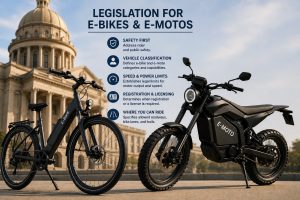
Electric Scooters (E-Scooters) – Under 18
- Minimum Age/License: Riders must be at least 16 years old and possess a valid learner’s permit or driver’s license.
- Helmet Law: Riders under 18 must wear a properly fitted bicycle helmet.
- Riding Rules: Must be ridden in bike lanes or streets; riding on sidewalks is illegal.
- Speed: Maximum speed is 15 mph.
- Passengers: Tandem riding (two people on one scooter) is prohibited.
Electric Bikes (E-Bikes) – Under 18
- Helmets: Mandatory for all riders under 18 regardless of class.
- Class 1 & 2 (Up to 20 mph): No minimum age.
- Class 3 (Up to 28 mph): Must be 16+ years old.
- Passengers: Allowed only if the e-bike is designed with a permanent seat or attached child carrier.
- Sidewalks: Generally prohibited; use bike lanes or streets.
Electric Motorcycles (E-Motos) & Mopeds – Under 18
- Definition: Vehicles exceeding 30 mph are considered motorcycles or motorized bicycles.
- Requirements: Must be 16+ with a license (M1/M2 endorsement), helmet, and registration.
- Safety Gear: DOT-approved helmets are required for all riders.
- Restrictions: Not allowed on bike paths, trails, or sidewalks.
The California Highway Patrol website has a convenient summary of each type of electric vehicle and the requirements for each.
Officials determined that the Orange County accident involved a 2025 Surron Ultra Bee. The vehicle is advertised as an off-road e-motorcycle reaching speeds up to 58 miles per hour and going from 0 to 31 miles per hour in 2.3 seconds. According to prosecutors, the bike is “16 times more powerful than what is legally allowed for an e-bike.” Thus, the bike was categorized by police as either a cycle under California Vehicle Code section 405 or a motorcycle under California Vehicle Code section 400. Either way, riders fall under the electric motorcycle category (above) and must be 16 years or older and have a motorcycle license to operate the vehicle, prosecutors said. They also need a DMV registration, license plate, insurance, and full motorcycle equipment.
Prosecutors added, “the only approved use of this e-motorcycle is either on private property or properly registered as Off-Highway Vehicle (OHV) areas.” The boy did not meet any of these requirements.
Part 3 of our series will visit the potential consequences for parents when their minor children are involved in e-bike accidents. Stay tuned for our next article on this topic.
For over 50 years, our firm has been providing the legislative history for bills and propositions from the 1800s to the present. If you are interested in knowing more about the background of any state or federal statute, please contact our office today! We even provide a legislative history report and analysis on your bill of interest with a procedural summary that helps guide you through the intricacies of how your bill eventually became law. Please contact our office for a quote today: quote@legintent.com or (530) 666-1917.