
Legislative Intent Service, Inc. is based just a few miles down the road from the country’s “bike capital” of Davis, California, and with the news of a fatal e-bike accident happening in this city of cycles recently, it hit close to home. It got us thinking about the rules of the road for this popular new form of transportation, and here is what we found.
Background on e-bikes:
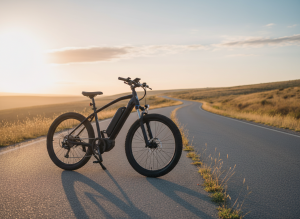
E-bikes (electric bikes) are conventional bicycles equipped with an electric motor and battery that provide pedal assistance or throttle power, making pedaling easier, faster, and more efficient. They are designed to augment human power rather than replace it, aiding with hills, long distances, and heavy loads without requiring a license in most areas.
California’s 2025 e-bike legislation, stemming from Senate Bill 1271, strictly limits e-bike motor power to 750 watts, sets speed caps by class, and mandates helmet and age restrictions, especially for Class 3 bikes. It bans pedal-less and high-powered e-bikes from sale and road use, ensuring riders comply with traffic laws and safety standards.
Key Components
- Motor: Usually located in the rear wheel (hub motor) or between the pedals (mid-drive) to provide power.
- Battery: Lithium-ion batteries supply energy, typically allowing for a range of 20 to 100 miles per charge.
- Controller/Display: Located on the handlebars, this allows riders to monitor battery life and adjust assistance levels.
e-Bike Classes
- Class 1 (Pedal-assist): Motor engages only while pedaling, stops at 20 mph.
- Class 2 (Throttle-assisted): Uses a throttle for propulsion without pedaling, stops at 20 mph.
- Class 3 (Speed Pedelec): Pedal-assist only, stops at 28 mph.
As the Assembly Committee on Transportation recently noted:
More than half of all trips made in the United States are shorter than three miles. To cover these distances, e-bikes are surging in popularity, evolving from recreational devices into genuine car replacements. The speed of these devices, coupled with the reduced physical strain they require, makes them a convenient, low-cost choice for short-range commuting. Furthermore, with average prices ranging from $1,000 to $3,500, e-bikes offer a significantly more affordable alternative to traditional motor vehicles. Their expanded use supports California’s environmental goals while potentially reducing traffic-related injuries and fatalities—which claimed over 4,400 lives in the state in 2024.
The lack of licensing and insurance requirements has further fueled this proliferation. In fact, e-bikes are now outselling electric cars: according to Kelley Blue Book, while 800,000 electric cars were purchased in the U.S. in 2022, e-bike imports reached 1.1 million. Projections indicate U.S. sales could reach 6.4 million units by 2025 due to rising demand. A 2024 survey by the Mineta Transportation Institute (MTI) found that 16% of U.S. adults had ridden an e-bike in the previous year, with 6% riding weekly. Additionally, the North American Bikeshare and Scootershare Association (NABSA) reported that riders logged 59 million trips on 76,000 shared e-bikes in 2024.
Growth in e-bike use has been accompanied by a rise in e-bike-related injuries. A new wave of high-speed electric motors has entered the California market, often exceeding the speed capabilities originally intended by California law. In response to the rising number of hospitalizations across the state, several bills have been introduced this year to address safety and regulation.
Proposed/pending legislation for 2026:
- Assembly Bill 2346: Sets speed limits for electric bicycles (e-bikes) and bicycle paths, requires certain disclosures when selling an e-bike, and requires all e-bikes to have a speedometer and integrated lights.
- Assembly Bill 1942: Would require class 2 electric bicycles and class 3 electric bicycles to be registered with the Department of Motor Vehicles and to display a special license plate issued by the department. The bill would require the department to adopt regulations to implement these requirements, and would make a person operating a class 2 or class 3 electric bicycle in violation of these requirements guilty of an infraction punishable by specified fines. By creating a new crime, the bill would impose a state-mandated local program.
- Assembly Bill 1557:
- Would define a class 1 electric bicycle as a bicycle equipped with a motor that provides assistance only when the rider is pedaling, that is not capable of exclusively propelling the bicycle, and that ceases to provide assistance when the bicycle reaches the speed of 16 miles per hour; would define a class 2 electric bicycle as a bicycle equipped with a motor that may be used exclusively to propel the bicycle, and that is not capable of providing assistance when the bicycle reaches the speed of 16 miles per hour; would provide that, notwithstanding these definitions, an electric bicycle manufactured prior to January 1, 2027, that was equipped with a motor that is not capable of exceeding 750 watts of peak power and otherwise met the legal requirements for the relevant class at the time of manufacture shall retain its classification.
- Would prohibit a manufacturer from equipping, and a retailer from offering for sale or advertising, any device labeled as an electric bicycle with a motor that is capable of exceeding 750 watts of peak power. The bill would also prohibit a manufacturer from equipping, and a retailer from offering for sale or advertising, any device labeled as a class 1 or class 2 electric bicycle with a motor that is capable of exceeding 250 watts of continuous power or that is capable of providing assistance to reach speeds greater than 16 miles per hour. The bill would make a violation of these provisions punishable by a civil penalty not to exceed $15,000 for a first violation and not to exceed $50,000 for each subsequent violation, upon an action brought by the Attorney General, a city attorney, a county counsel, or a district attorney. The bill would specify that a violation of this provision is not a criminal offense.
- Assembly Bill 1569: Requires local education agencies (LEAs) to verify that students complete a safety training course, as specified, prior to parking an electric bicycle on campus.
- Assembly Bill 1614: Expands existing law to require that bicycle operators and passengers be properly seated when riding on bicycle paths, as is already required on local streets and roads.
- Senate Bill 1167: Revises the definitions of electric bicycles (e-bikes), motor-driven cycles, and mopeds, and updates labeling and disclosure requirements for manufacturers and sellers of these devices. It also expands prohibitions on false advertising related to e-bikes. The bill additionally establishes new operational and safety requirements, as specified, expands reckless driving provisions to include bicycles, and imposes additional reporting requirements on law enforcement.
The Legislature will likely see even more proposed legislation in the next year or two with calls for protections in the wake of the deadly Davis crash. Here at Legislative Intent Service, Inc., we are constantly on “bill watch” to be ready to research recently enacted and even pending legislation to help our clients more fully understand the questions before them.
For over 50 years, our firm has been providing the legislative history for bills and propositions from the 1800s to the present. If you are interested in knowing more about the background of any state or federal statute, please contact our office today! We even provide a legislative history report and analysis on your bill of interest with a procedural summary that helps guide you through the intricacies of how your bill eventually became law. Please contact our office for a quote today: quote@legintent.com or (530) 666-1917.